Intel’s Crescent Island Leak Points To A Cheaper Route For AI GPUs
Intel’s next AI accelerator is starting to look very real, and this one is interesting because it is not trying to win the usual HBM flex battle.
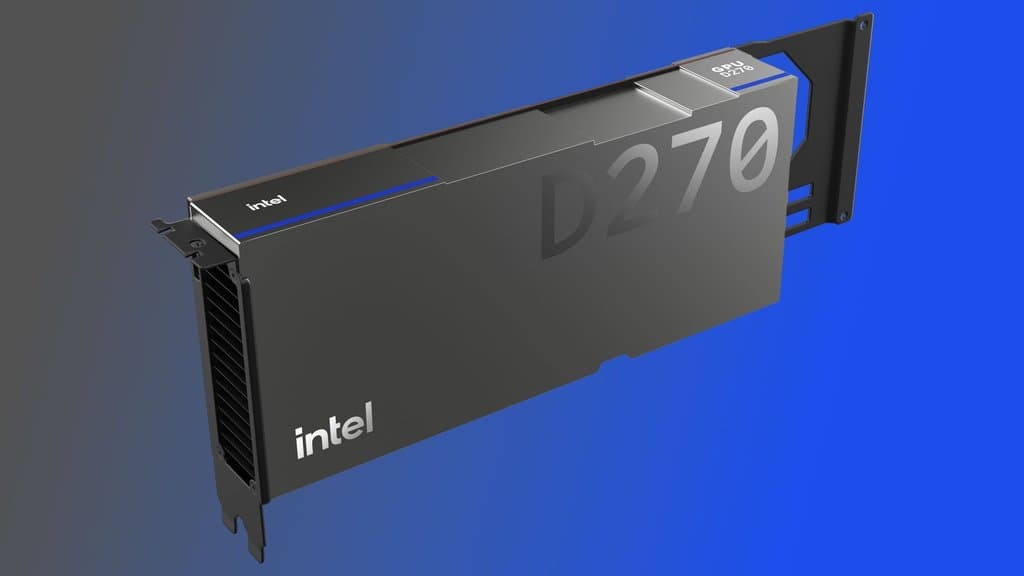
A leaked PCB image, shared by hardware leaker YuuKi_AnS and reported by Wccftech, appears to show Intel’s upcoming Crescent Island PCIe accelerator. This is not a gaming GPU for your next desktop build, so don’t expect some Arc card you can throw into a Shopee cart. Crescent Island is aimed at AI inference workloads — basically the part of AI that runs models and serves responses after training is done.
The biggest thing visible on the board is the GPU package itself. Based on the leak, the chip looks massive, reportedly larger than Intel’s current Xe2-based BMG-G31 flagship design. Crescent Island uses Intel’s Xe3P architecture, which comes after the Xe3 architecture Intel has already been talking about around Panther Lake and future Arc products.
Around the GPU, the PCB shows memory placement for LPDDR5X instead of the HBM memory that dominates high-end AI accelerators from NVIDIA and AMD. According to the report, the board has 12 LPDDR5X sites on the front and eight on the back, making 20 total. With 8GB per module, that works out to a very chunky 160GB of memory.
That memory choice is the spicy part. HBM3E is expensive, in huge demand, and next-gen parts are already moving the conversation toward HBM4. By using LPDDR5X, Intel could avoid some of the supply and pricing pressure around HBM, while still offering large memory capacity for inference tasks. It probably won’t be the monster bandwidth king, but for cost-sensitive AI serving, this could make sense.
For Malaysia and SEA, this matters more than it sounds. AI compute is becoming a real infrastructure issue here, from cloud providers to startups building chatbots, creator tools, moderation systems, customer support automation, and local-language AI services. Not everyone can pay NVIDIA tax for the biggest data center GPUs. If Intel can offer a more affordable accelerator that works in air-cooled enterprise servers, that could help smaller regional players scale without burning ridiculous cash.
The leaked PCB also points to a serious board design. Wccftech notes 13 VRMs that appear likely to be populated, with 18 positions in total. Power comes from a single 16-pin connector on the back of the board. There is also a side USB Type-C port, which is likely there for testing or debug work rather than normal customer use.
Intel has described Crescent Island as a power- and cost-optimized data center GPU built for AI inference. It is meant for air-cooled servers and is expected to support a wide range of data types, including workloads useful for “tokens-as-a-service” providers. In simple terms: companies selling AI output at scale care about performance per watt and cost per generated token. If Intel gets that balance right, this card could find a lane.
There is still a long wait, though. Intel is reportedly targeting customer sampling for Crescent Island in the second half of 2026. So for now, this is more of a roadmap signal than a product you will see in local server racks tomorrow.
Still, the strategy is clear: Intel may not be chasing the loudest AI GPU headline here. It is trying to build something practical, scalable, and cheaper to deploy. If the software stack holds up, that could be exactly the kind of boring-but-useful hardware SEA AI builders actually need.
Source: Wccftech Gaming