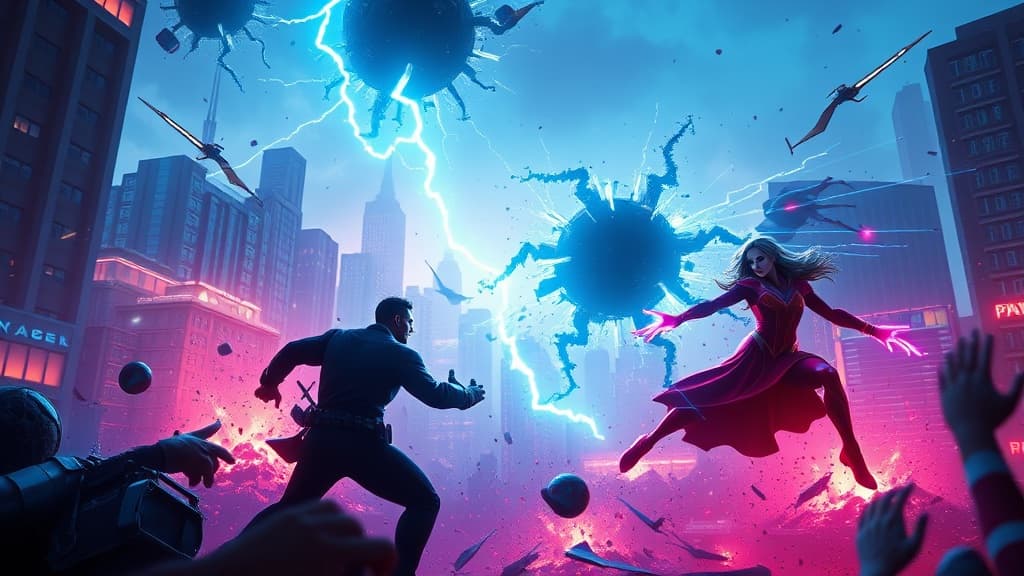
Marvel Rivals Beginner's Guide — Everything You Need to Know
Last Updated: March 30, 2025
Starting a new competitive shooter can feel overwhelming, especially one with a roster as large and varied as Marvel Rivals. This beginner's guide covers everything you need to know to jump in with confidence, build good habits from day one, and start climbing the ranks. Whether you are a Marvel fan trying your first hero shooter or a genre veteran exploring a new title, this guide will get you up to speed.
What Is Marvel Rivals?
Marvel Rivals is a free-to-play 6v6 team-based hero shooter developed by NetEase Games in collaboration with Marvel Games. Released in December 2024, it is available on PC, PlayStation 5, and Xbox Series X|S with full cross-platform play. Players select from a roster of over 30 Marvel heroes and villains — each with unique abilities, weapons, and ultimate moves — and work together to complete map objectives.
The game stands out from other hero shooters through its Team-Up system, destructible environments, and multiverse-themed maps. It is free to download and play, with monetization focused entirely on cosmetic items like skins, emotes, and battle pass rewards. There is no pay-to-win element — every hero is available to all players from the start.
For players in Southeast Asia, Marvel Rivals offers dedicated regional servers with low latency, making it one of the smoothest online shooters available in the region. The Marvel IP is enormously popular across SEA, and the local community has grown rapidly since launch.
Hero Roles and Selection
Every hero in Marvel Rivals falls into one of three roles:
Vanguard heroes are the frontline. They have large health pools, crowd control abilities, and are responsible for creating space and absorbing damage so their team can operate safely. Think Hulk charging into a chokepoint or Magneto using magnetic barriers to block an entire corridor. If you enjoy leading the charge and protecting your team, Vanguard is your role.
Duelist heroes are the damage dealers. They come in a variety of flavors — hitscan marksmen like Black Widow, mobile flankers like Spider-Man, and area damage specialists like Storm. Your job as a Duelist is to secure eliminations and pressure the enemy team. This is the most popular role, so expect competition during hero selection.
Strategist heroes are the supports. They heal, buff, and enable their team through utility abilities. Luna Snow provides consistent healing output, Jeff the Land Shark offers burst healing and disruption, and Groot zones enemies with root abilities while keeping allies alive. Strategists are essential to every team composition, and good Strategist play often determines the outcome of close matches.
As a beginner, try to learn at least one hero in each role. This flexibility makes you a better teammate and ensures you can always contribute, even when your preferred hero is taken. Start with heroes that have straightforward kits: Iron Man (Duelist), Hulk (Vanguard), and Luna Snow (Strategist) are all excellent entry points.
Combat and Ability Fundamentals
Each hero has a primary attack, several abilities on cooldowns, and an ultimate ability that charges over time through dealing and receiving damage. Understanding your hero's full kit is the first step to playing them well.
Primary attacks are your bread and butter. Some heroes use projectiles, others use hitscan weapons, and some rely on melee. Spend time in the practice range learning your hero's fire rate, damage falloff, and effective range.
Abilities are what make each hero unique. These are on cooldowns ranging from a few seconds to over twenty seconds. Learning when to use — and when to hold — your abilities is one of the most important skills in Marvel Rivals. A Spider-Man who burns his web swing to engage has no escape. A Luna Snow who uses her ice wall offensively cannot use it defensively when the enemy dives her.
Ultimate abilities are game-changing moves that charge over time. When your ultimate is ready, communicate with your team and look for the right moment to use it. Combining ultimates with your teammates — known as a "combo" — can wipe entire teams and swing objective fights decisively.
Team Composition and Synergy
Marvel Rivals is a team game, and team composition matters. A balanced team typically includes two Vanguards, two Duelists, and two Strategists, though the game allows flexibility in role distribution.
The Team-Up system is unique to Marvel Rivals. Certain hero pairings unlock special combo abilities that are only available when both heroes are on the same team. For example, Spider-Man and Venom gain a symbiote-enhanced attack, while Thor and Hela unlock a devastating Asgardian barrage. Check the Team-Up menu in hero select to see which pairings are available — building around these synergies gives your team a significant advantage.
Beyond Team-Up abilities, think about how your team's heroes complement each other. A dive composition with mobile heroes like Spider-Man, Iron Man, and Jeff the Land Shark plays very differently from a bunker composition built around Magneto, Hela, and Luna Snow. Neither is inherently better — the right composition depends on the map, mode, and what the enemy team is running.
Game Modes
Marvel Rivals features three core game modes:
Domination tasks teams with capturing and holding control points on the map. Points are contested in sequence, and the attacking team must capture each point before time runs out. Communication and coordinated pushes are critical in this mode.
Convoy is a payload escort mode. The attacking team pushes a payload along a fixed route while the defending team tries to stop them. Positioning around the payload and managing ultimate economy are key skills for Convoy.
Convergence is a hybrid King of the Hill mode where both teams fight over a central objective. The twist is that the objective zone shifts location as the match progresses, creating dynamic fights that reward adaptability. Convergence matches tend to be the most chaotic and exciting, with frequent momentum swings.
Maps and Objectives
Maps in Marvel Rivals are drawn from across the Marvel multiverse, each with unique layouts, sightlines, and destructible elements. Learning the maps is just as important as learning your hero.
Pay attention to high ground positions — they give you better sightlines and make you harder to hit. Learn where the health pack locations are on every map, as knowing the nearest health pack can save your life when your Strategist is down. Watch for destructible terrain — walls and floors that can be broken open by abilities, creating new pathways or removing cover.
For SEA players, understanding map callouts used by the local community speeds up communication. Join a regional Discord server to learn the shorthand your teammates use. Quick, clear callouts win fights.
Ranked Play
Ranked mode in Marvel Rivals uses a tier system ranging from Bronze through Diamond and into the top-tier Celestial rank. You must complete placement matches before receiving your initial rank.
To climb effectively, focus on consistency over highlight plays. Play your best two to three heroes, communicate with your team, and prioritize objective play over chasing eliminations. Win streaks grant bonus rank points, so maintaining a positive mindset and avoiding tilt is directly rewarded by the system.
In the SEA region, ranked queue times are shortest during evening hours (roughly 7 PM to midnight local time). Playing during peak hours gives you faster queues and more balanced matches. If you are serious about climbing, consider finding a regular duo or trio partner through community Discord servers — coordinated groups have a significant advantage over solo queue players.
Common Beginner Mistakes
Overextending alone. Marvel Rivals punishes solo plays harshly. If you push ahead of your team, you will be focused down and eliminated before anyone can help. Stay with your group, especially during objective fights.
Ignoring the Strategist. Protecting your healers is everyone's job, not just the Vanguard's. If an enemy flanker dives your Luna Snow and no one peels for her, your entire team loses its sustain. Keep an eye on your backline.
Holding ultimates too long. Many beginners save their ultimate for the "perfect moment" that never comes. A good ultimate used frequently is far more valuable than a perfect ultimate used once per match. If a fight is winnable with your ultimate, use it.
Not swapping heroes. If your pick is being hard countered, swap. There is no shame in switching to a hero that better fits the current situation. Stubbornly sticking with a countered hero costs your team matches.
Tunnel vision on eliminations. Kills do not win games — objectives do. A team that plays the objective and secures timely eliminations will always beat a team of fraggers who ignore the point. Focus on the win condition for your current mode.
Growing as a Player
Improvement in Marvel Rivals comes from deliberate practice and honest self-assessment. After each match, think about what went well and what you could have done differently. Did you die because of poor positioning? Did you use your ultimate at the wrong time? Did you fail to swap when countered?
Watch your replays. Marvel Rivals includes a replay system that lets you review your matches from any perspective. Watching your own gameplay from a third-person view reveals positioning mistakes and missed opportunities that are invisible in the heat of the moment.
Engage with the community. The SEA Marvel Rivals community is active and welcoming, with coaching resources, tier list discussions, and team-finding channels available on Discord and social media. Following local content creators on YouTube and TikTok is a great way to stay current on meta shifts and pick up new tricks. Many SEA creators produce content in Bahasa, Tagalog, Thai, and Vietnamese alongside English, making high-quality guides accessible to the broader regional audience.
Set small, achievable goals. Instead of fixating on your rank, focus on specific improvements — land more consistent headshots, die fewer than five times per match, or learn a new hero to competence. These incremental gains compound over time and turn beginners into confident, capable players. The climb is a marathon, not a sprint, and every session where you learn something new is a session well spent.