Wild Rift Beginner's Guide — Everything You Need to Know
Last Updated: March 30, 2025
What Is Wild Rift?
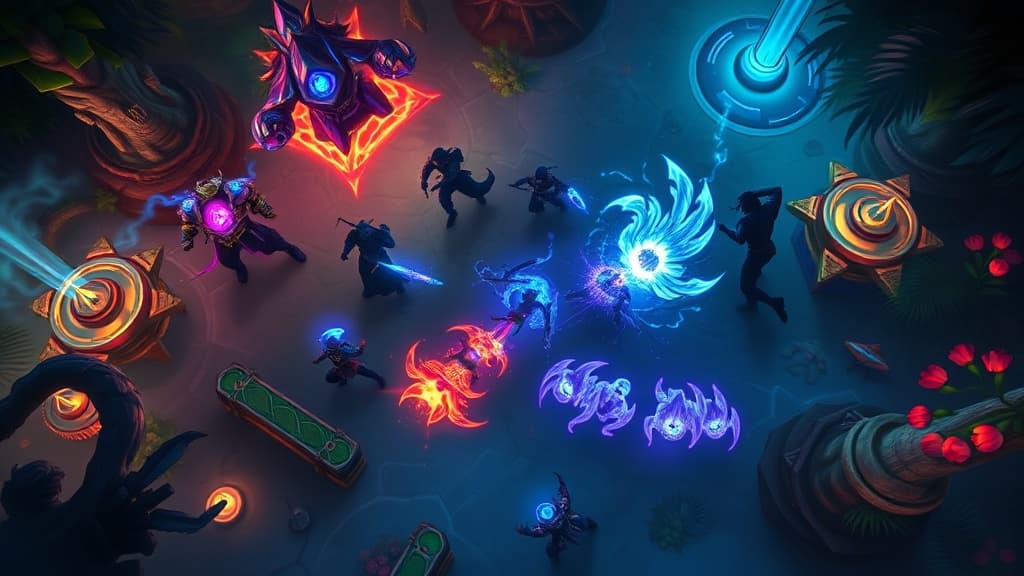
League of Legends: Wild Rift is a mobile and console adaptation of Riot Games' legendary PC MOBA, League of Legends. Unlike a straight port, Wild Rift was rebuilt from scratch for touchscreen controls and shorter play sessions. Matches typically last 15 to 20 minutes, making it far more accessible than the 30 to 45-minute games common on PC. Two teams of five players each select a champion, head onto a symmetrical three-lane map called the Rift, and compete to destroy the enemy team's Nexus, the core structure inside their base.
Wild Rift launched in Southeast Asia and has since become one of the most popular mobile games in the region. If you are playing from the SEA server, you will find fast queue times, a thriving ranked ladder, and a competitive esports scene backed by Riot Games' regional events and the annual Icons Global Championship.
Roles and Lanes
The map has three lanes and a jungle area between them. Each player fills one of five roles:
Baron Lane (Solo Lane) sits at the top of the map. This lane is typically occupied by bruisers or tanks who can hold their own in isolated 1v1 matchups. Champions like Darius, Garen, and Fiora thrive here.
Mid Lane is the shortest lane and sits at the centre of the map. Mid laners are usually mages or assassins with strong wave-clear and roaming potential. Ahri, Yasuo, and Zed are popular choices.
Dragon Lane (Duo Lane) is the bottom lane where the ADC (attack damage carry) and Support play together. The ADC focuses on farming gold and scaling into a late-game damage dealer, while the Support protects them and provides vision.
Jungle is the role that operates between the lanes, clearing neutral monster camps for gold and experience. Junglers gank lanes, secure Dragon and Baron objectives, and control the pace of the early game. Lee Sin, Vi, and Evelynn are strong jungle picks.
Champion Classes
Wild Rift's champions fall into several broad classes, each with a distinct role in team fights:
Fighters are melee champions with a mix of damage and durability. They excel in extended trades and thrive in the Baron lane.
Tanks absorb damage and initiate fights with crowd control abilities. They protect their carries and disrupt the enemy backline.
Mages deal sustained or burst magic damage from range. They control zones of the map with area-of-effect abilities and scale well with items.
Assassins specialise in eliminating high-value targets quickly. They are fragile but mobile, darting in and out of fights to pick off enemy carries.
Marksmen deal consistent physical damage from range using auto attacks. They are the primary damage source in late-game team fights but require protection from their team.
Supports provide healing, shielding, crowd control, and vision. They enable their team rather than dealing damage themselves and are crucial for keeping carries alive.
Gold and Items
Gold is the currency that fuels your champion's power. You earn gold by last-hitting enemy minions, destroying turrets, killing enemy champions, and clearing jungle camps. Last-hitting, the act of landing the killing blow on a minion, is the most reliable source of income and a fundamental skill to develop early on.
You spend gold on items in the shop, which is accessible at your base or through the quick-buy menu. Items provide stats like attack damage, ability power, armour, and magic resistance. Most champions have a core build of three to four items that they rush every game, followed by situational items that adapt to the enemy team's composition. Wild Rift's recommended builds are a solid starting point, but learning to adjust your build based on the match state will give you a meaningful advantage.
Boots are a must-buy in every game. They increase your movement speed and can be enchanted with active abilities like a dash, stasis, or shield that provide crucial utility in fights.
Objectives and Map Control
Winning in Wild Rift is not just about getting kills. Objectives are the primary path to victory, and understanding when to prioritise them separates good players from great ones.
Turrets protect each lane and must be destroyed to reach the enemy Nexus. Taking turrets opens up the map, grants your team global gold, and creates pressure that forces the enemy to respond.
Dragons spawn in the Dragon pit on the bottom side of the map. Each elemental dragon provides a permanent team-wide buff, and securing multiple dragons grants the powerful Elder Dragon buff that can swing the game decisively.
Rift Herald spawns on the top side of the map during the early-to-mid game. Defeating it grants a summonable ally that charges down a lane and deals massive damage to turrets, making it an excellent tool for accelerating your push.
Baron Nashor replaces the Rift Herald later in the game and is the most impactful objective on the map. The Baron buff empowers your team's minions and grants bonus stats, making it significantly easier to siege and close out the game.
Vision is essential for objective control. Place wards in river bushes, near Dragon and Baron pits, and in the enemy jungle to track opponent movements. The Scryer's Bloom plant can also reveal a wide area, helping you make informed decisions about when it is safe to take an objective.
Team Fights
Team fights are the climactic moments that decide most Wild Rift games. Positioning is everything: marksmen and mages should stay at the backline dealing damage from safety, while tanks and fighters create space by engaging or peeling for their carries.
Focus on targeting the right enemies. Diving past the frontline to reach the enemy ADC is tempting, but if it costs you your life before you deal meaningful damage, it is not worth it. Instead, hit the closest enemy you can safely attack and wait for an opportunity to reach priority targets.
Use your abilities with purpose. Crowd control abilities like stuns and knock-ups should be chained together for maximum impact, and ultimates should be saved for moments when they can hit multiple enemies or secure a kill on a key target.
Common Beginner Mistakes
Overextending without vision. Pushing past the river without wards is an invitation for the enemy jungler to gank you. Always ward before you push.
Ignoring the minimap. The minimap tells you where enemies are and are not. If multiple enemies are missing, play cautiously and assume they are coming for you.
Chasing kills into unwarded territory. A low-health enemy retreating into fog of war is often bait. Take the turret or objective instead of risking a death for a kill that may not materialise.
Neglecting farming. Kills are flashy, but consistent minion farming generates more reliable gold over the course of a game. Aim for at least seven minions per minute as a baseline.
Building the same items every game. Adapting your build to the enemy team composition is critical. If they have heavy magic damage, buy magic resistance. If they have a fed assassin, consider a defensive item earlier than usual.
Ranked Mode
Ranked mode is where Wild Rift's competitive depth truly shines. The ladder spans ten tiers: Iron, Bronze, Silver, Gold, Platinum, Emerald, Diamond, Master, Grandmaster, and Challenger. Each tier below Master is divided into four divisions, and you climb by earning Victory Points through wins.
Placement matches at the start of each season determine your starting rank. From there, consistent performance and win streaks propel you upward, while losing streaks trigger demotion protection that gives you a buffer before dropping a tier. Seasonal rewards, including exclusive skins and profile borders, incentivise reaching higher ranks.
In the SEA region, ranked competition is particularly intense. The server's large player base ensures competitive matchmaking at every tier, and the region's vibrant esports scene, featuring Riot-backed tournaments and community-organised leagues, provides aspirational goals for players looking to test their skills beyond the ranked ladder. Keep an eye on Riot SEA's social channels and in-game event tabs for regional tournaments and exclusive rewards tied to SEA community events.
Growing as a Player
Improvement in Wild Rift is a gradual process built on repetition, self-reflection, and a willingness to learn from losses. Here are practical steps to accelerate your growth:
Review your replays. Wild Rift's replay system lets you watch your games from any perspective. After a loss, identify the moments where you died unnecessarily or missed an objective, and make a conscious effort to correct those mistakes in future games.
Limit your champion pool. Playing two or three champions well is far more effective than playing ten champions poorly. Deep familiarity with a champion's damage thresholds, cooldowns, and matchups gives you a decisive edge.
Watch high-level gameplay. Content creators and pro players across YouTube, Twitch, and TikTok regularly publish educational content, particularly within the SEA community where Wild Rift viewership is massive. Watching how Challenger players approach laning, team fights, and macro decisions will accelerate your understanding of the game.
Play with intent. Every game should have a focus area, whether it is improving your CS numbers, tracking the enemy jungler, or practising a specific champion combo. Mindless grinding leads to stagnation; deliberate practice leads to growth.
Stay positive. Tilt is the enemy of improvement. When you lose two or three games in a row, take a break. Returning to the game with a clear head is more productive than queuing up frustrated and repeating the same mistakes. The ranked ladder rewards consistency over time, so focus on your own improvement rather than your teammates' mistakes.